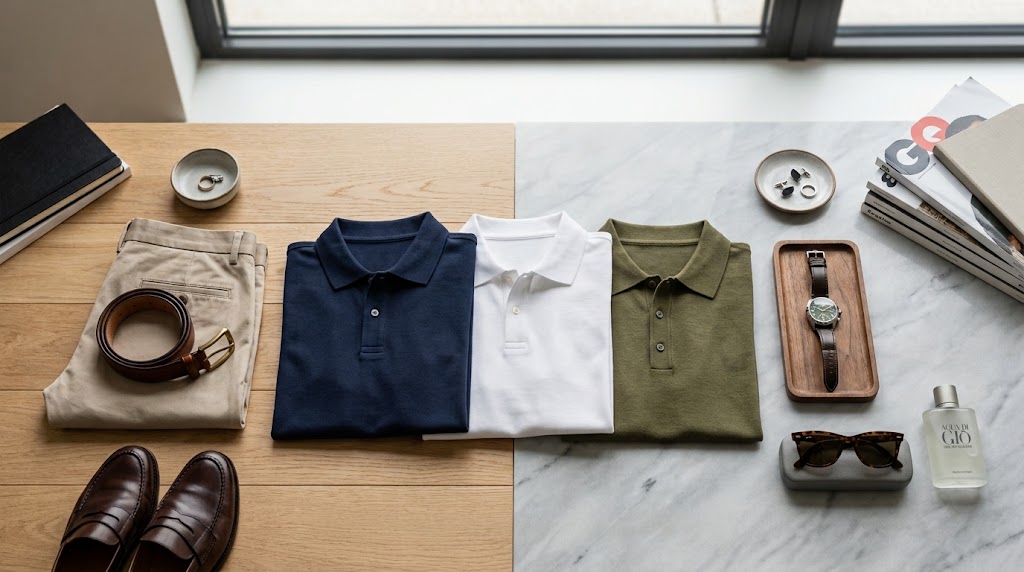
The polo shirt is one of the most versatile pieces in a modern wardrobe. It offers more structure than a T-shirt while remaining more relaxed than a traditional dress shirt. That makes it useful for everything from weekend outfits and travel to golf, smart-casual dinners, and many business-casual workplaces.
But choosing the right polo is about more than picking a color. The fabric, fit, collar, length, and construction all affect how the shirt looks and feels.
This guide explains what a polo shirt is, its history, how a polo should fit, the main polo shirt fabrics, how to wear one, how it compares with other shirts, and how to care for it properly.
What Is a Polo Shirt?
A polo shirt is a short-sleeved knitted shirt that usually features a soft collar, a two- or three-button placket, and a relatively relaxed construction. Traditional versions are often made from cotton piqué, although modern polos are also available in jersey cotton, merino wool, linen blends, polyester, and performance fabrics.
The polo occupies a useful middle ground between casual and formal clothing. A simple cotton polo can work with jeans or shorts, while a refined merino or fine-knit polo can be paired with tailored trousers or a blazer.
Although the name is associated with polo, the modern polo shirt is strongly connected to tennis and the work of French tennis champion René Lacoste.
A Brief History of the Polo Shirt
The history of the modern polo shirt is more closely connected to tennis than many people realize.
In the early 20th century, tennis players commonly wore relatively formal shirts that were not especially practical for movement. René Lacoste helped change that approach by introducing a lighter, short-sleeved shirt designed to provide greater freedom of movement.
Lacoste’s own history records that in 1933, René Lacoste introduced a lightweight polo made from cotton petit piqué and founded the company with André Gillier. The design became closely associated with the Lacoste brand and its crocodile emblem.
The famous L.12.12 became one of the best-known examples of the traditional polo. Lacoste describes the name as referring to Lacoste, petit piqué, short sleeves, and the number of prototypes produced during its development.
The polo later moved well beyond the tennis court. In 1972, Ralph Lauren introduced its Polo shirt, offering it in a wide range of colors and helping establish the garment as an important part of American fashion and lifestyle culture.
Today, the polo is worn across sports, casual fashion, business-casual environments, travel, and everyday style.
Polo Shirt Fit: How Should a Polo Fit?
The right fit can make a bigger difference than the brand or price of a polo shirt.
A good polo should follow the natural shape of your body without pulling tightly across the chest or hanging excessively around the waist. The exact fit depends on personal preference, body shape, and how you plan to wear the shirt.
Shoulders
The shoulder seam should generally sit close to the natural edge of your shoulder.
If the seam falls noticeably down your upper arm, the shirt is probably too large. If it sits well inside your shoulder line, the shirt may be too small.
Chest
The fabric should lie comfortably across your chest without creating excessive pulling around the buttons.
You should have enough room to move your arms and breathe comfortably. Avoid choosing a smaller size simply to create a slimmer appearance.
Sleeves
Traditional polo sleeves commonly finish around the middle of the upper arm, although modern cuts vary.
The sleeve should sit comfortably without squeezing the bicep. A very loose sleeve can make the shirt look oversized, while an extremely tight sleeve can restrict movement.
Length
For an untucked polo, the hem should generally provide enough coverage to look intentional without extending excessively down the body.
If you plan to tuck the polo into trousers or chinos, choose a length that stays securely tucked without creating excessive fabric around the waist.
Waist and Torso
A polo should follow your torso without clinging tightly to your stomach.
If you want a more fitted appearance, look for an athletic, slim, or tailored cut instead of buying a regular-fit polo one size too small.
Polo Shirt Fit Styles Explained
Different brands use different terminology, but polo fits generally fall into three broad categories.
Slim or Tailored Fit
A slim-fit polo sits closer to the body and usually has less room through the chest and waist.
It can work well with tailored trousers, dark jeans, or layered outfits. Make sure the shirt still allows comfortable movement.
Regular or Classic Fit
A regular-fit polo provides more room through the torso while maintaining a clean silhouette.
It is one of the most versatile options and works well for everyday wear, travel, casual offices, and weekend outfits.
Relaxed Fit
A relaxed polo provides additional room through the body and sleeves.
It is useful for casual outfits and situations where comfort and movement are more important than a tailored silhouette.
Polo Shirt Fabrics: Which One Should You Choose?
Fabric affects a polo’s softness, breathability, structure, durability, and appearance. The best choice depends on where you intend to wear it.
Cotton Piqué
Cotton piqué is one of the classic materials associated with polo shirts.
It has a textured knitted surface that gives the shirt more structure than a very smooth jersey fabric. Traditional Lacoste polos, for example, use petit piqué as a signature material.
Best for:
- Everyday smart-casual outfits
- Warm-weather wear
- Golf and tennis-inspired styles
- Polished casual looks
Cotton Jersey
Jersey cotton is smoother and usually softer against the skin than piqué.
It tends to drape more naturally, making it a good choice when comfort and a relaxed appearance are priorities.
Best for:
- Casual outfits
- Travel
- Weekend wear
- Layering
Merino Wool
Fine merino wool can make a polo look more refined than a standard cotton version.
Merino is known for its ability to manage moisture and temperature while remaining relatively lightweight. It can therefore work well for transitional weather and smart-casual outfits.
Best for:
- Smart-casual dressing
- Travel
- Layering
- Cooler or variable weather
Performance Fabrics
Performance polos often use polyester, elastane, or other technical fibers.
These materials can provide stretch, moisture management, quick drying, and easier maintenance. They are particularly common in golf and other active settings.
Best for:
- Golf
- Outdoor activities
- Travel
- Hot or physically active environments
Pima and Supima Cotton
Pima and Supima cotton are premium cotton varieties valued for their soft hand feel and long fibers.
They can be a good choice when you want the comfort of cotton with a more refined finish.
Best for:
- Premium everyday wear
- Smart-casual outfits
- Soft, comfortable polos
How to Choose the Right Polo Shirt
Instead of choosing a polo based only on the logo or price, consider five factors.
1. Start With the Occasion
A lightweight performance polo makes sense for golf, while a fine merino or high-quality cotton polo may be better for dinner or an office.
2. Consider the Climate
For hot weather, look for breathable cotton, lightweight blends, or technical fabrics designed for moisture management.
For cooler conditions, merino wool or heavier cotton can provide additional comfort.
3. Choose the Right Fit
Do not assume that a slim fit is always better. The best fit is one that gives you a clean silhouette without restricting movement.
4. Pay Attention to the Collar
A collar that maintains its shape usually gives a polo a more polished appearance.
For business-casual styling, a structured collar can look more intentional than a very soft, floppy collar.
5. Check the Care Label
Different fabrics require different care. Always follow the garment’s care instructions, especially for merino wool, performance fabrics, and garments with special finishes.
How to Wear a Polo Shirt
One reason the polo remains popular is its versatility.
Business Casual
A polo can work in many business-casual environments, but workplace dress codes vary.
For a polished office outfit, choose a solid-color polo in a refined fabric and combine it with chinos or tailored trousers.
You can also add an unstructured blazer or sport coat when appropriate.
Good combinations include:
- Navy polo + beige chinos
- White polo + gray trousers
- Black polo + dark tailored trousers
- Fine-knit polo + unstructured blazer
Avoid large graphics, oversized logos, or visibly athletic designs when dressing for a conservative workplace.
Weekend Casual
For relaxed weekends, the rules are much more flexible.
Try a cotton or jersey polo with:
- Jeans
- Chinos
- Shorts
- Casual sneakers
- Loafers
You can leave a casual polo untucked when the shirt has an appropriate hem length.
Golf and Active Wear
Performance polos are particularly useful for golf and other activities where freedom of movement matters.
Look for:
- Stretch fabric
- Breathability
- Moisture management
- Lightweight construction
- Comfortable sleeves
Lacoste itself offers separate tennis and golf polo categories using technical materials and performance-focused construction, illustrating how the traditional polo has evolved into sport-specific designs.
Smart-Casual Evenings
A polo can also work for dinner, drinks, or a relaxed evening event.
Choose a dark, solid color and a refined fabric. Pair it with tailored trousers or dark jeans and clean leather shoes or minimalist sneakers.
For an elevated outfit, add a simple blazer.
Can You Wear a Polo With a Suit?
Sometimes, but context matters.
A polo can work with a relaxed or unstructured suit for a modern smart-casual look. A fine-knit polo in a dark neutral color generally creates a cleaner result than a sporty performance polo.
However, a traditional formal business setting usually calls for a dress shirt rather than a polo.
The key is matching the formality of the polo to the rest of the outfit.
Polo vs. T-Shirt vs. Dress Shirt
| Feature | Polo Shirt | T-Shirt | Dress Shirt |
|---|---|---|---|
| Formality | Casual to business casual | Casual | Business to formal |
| Collar | Soft or structured collar | No collar | Structured collar |
| Typical fabric | Piqué, jersey, wool, blends | Jersey | Woven cotton and blends |
| Best for | Smart casual, office, golf, weekends | Casual wear, gym, lounging | Offices, meetings, formal events |
| Common pairings | Chinos, trousers, jeans | Jeans, shorts, joggers | Suit, trousers, dress pants |
| Styling flexibility | High | High for casual wear | High for formal wear |
The polo is essentially a middle-ground option: more structured than a T-shirt but less formal than a traditional dress shirt.
Polo Shirt Care: How to Wash and Maintain It
Proper care can help preserve the fabric, color, collar, and shape of a polo.
Always check the garment’s care label first because washing instructions vary by material and construction.
Washing Tips
Turn the shirt inside out.
This can help reduce surface friction and protect prints or decorative details.
Use the recommended water temperature.
Cold or cool water is often a sensible choice for cotton polos when the care label permits it.
Use a gentle cycle when appropriate.
A gentler wash can reduce unnecessary mechanical stress on the fabric.
Use a suitable detergent.
Avoid using harsh bleach on colored garments unless the care instructions specifically allow it.
Do not automatically wash every fabric the same way.
Merino wool, performance fabrics, and delicate blends may require different care.
Drying Tips
Air drying is often a good option for polos, particularly when shrinkage is a concern.
Avoid excessive heat unless the care label permits tumble drying.
After washing, reshape the collar and garment while it is still damp and allow it to dry according to the manufacturer’s instructions.
Ironing and Storage
If ironing is necessary, use the temperature recommended on the care label.
For polos that wrinkle easily, a steamer can be a convenient alternative.
Store structured polos on suitable hangers or folded neatly to help maintain their shape.
For travel, folding or careful rolling can reduce unnecessary creasing.
How Often Should You Wash a Polo Shirt?
There is no universal rule that every polo must be washed after exactly one wear.
Washing frequency depends on factors such as:
- How much you sweat
- Whether the polo was worn directly against your skin
- The weather
- The activity
- Whether the shirt developed an odor or visible marks
- The fabric and care instructions
A polo worn for several hours during a hot day may need washing sooner than one worn briefly in cool weather.
The goal is to clean the garment when necessary without unnecessarily over-washing it.
Common Polo Shirt Mistakes to Avoid
Wearing the Wrong Size
A polo should not hang like an oversized T-shirt unless that is deliberately the style you want.
At the same time, sizing down too far can cause pulling around the chest and buttons.
Choosing the Wrong Fabric
A heavy cotton piqué may not be the most comfortable choice for intense activity, while a technical performance polo may look too sporty for a formal office.
Match the fabric to the occasion.
Ignoring Shirt Length
A very long polo can look untidy when worn untucked. A very short polo may come untucked constantly.
Choose a length that matches how you intend to wear it.
Overwashing
Frequent washing with excessive heat can contribute to wear, fading, and shrinkage.
Follow the garment’s care instructions and use the gentlest suitable method.
Wearing a Wrinkled Polo
Even a high-quality polo can look careless when badly wrinkled.
Steam or iron it according to the care label before wearing it for a polished occasion.
Treating Every Polo as Formal
A polo can be business casual in some environments, but it is not automatically appropriate for every office or event.
Always consider the dress code.
Lacoste vs. Ralph Lauren Polo Shirts
Lacoste and Ralph Lauren are two of the most recognizable names associated with polo shirts, but their histories and brand identities are different.
Lacoste traces its iconic polo to René Lacoste’s 1933 design and its petit piqué construction. The brand’s crocodile emblem is closely connected to that heritage.
Ralph Lauren introduced its Polo shirt in 1972. The brand’s own history describes the shirt as becoming an icon of American style, with the product offered in a broad range of colors.
Rather than assuming one brand is automatically better, compare the specific garment’s:
- Fabric
- Fit
- Construction
- Collar shape
- Intended use
- Price
- Care requirements
The individual model often matters as much as the brand name.
What Color Polo Should You Buy First?
If you are building a versatile wardrobe, start with colors that can work across several outfits.
Navy
Navy is easy to combine with beige, gray, white, denim, and many neutral trousers.
White
A white polo provides a clean appearance and works particularly well during spring and summer.
Black
Black creates a sharper, more understated look and works well with dark jeans or tailored trousers.
Gray
Gray offers a softer alternative to black and works easily with denim, chinos, and other neutral colors.
Earth Tones
Olive, beige, brown, and muted green can add variety while remaining relatively easy to style.
Frequently Asked Questions
Is a polo shirt business casual?
A polo can be appropriate for business-casual environments, but workplace dress codes differ. For a polished appearance, choose a clean, well-fitting polo in a refined fabric and pair it with chinos or tailored trousers.
What is the best fabric for a polo shirt?
There is no single best fabric for every situation. Cotton piqué is a classic all-purpose option, jersey is comfortable and casual, merino can look refined, and performance blends are useful for sport and active wear.
Should a polo shirt be tucked in?
It depends on the outfit and setting. Tucking a polo into tailored trousers can create a more polished appearance, while an appropriately cut polo can look perfectly natural when worn untucked.
Can you wear a polo shirt with jeans?
Yes. A polo with jeans is a simple smart-casual combination. Choose a clean-fitting polo and well-fitting jeans, then finish the outfit with sneakers, loafers, or casual leather shoes.
Can you wear a polo shirt with shorts?
Yes. A polo and shorts combination works particularly well in warm weather. Cotton and lightweight performance fabrics are useful choices depending on whether the outfit is casual or athletic.
How do I stop a polo shirt from shrinking?
Follow the garment’s care label, avoid unnecessary high heat, and consider air drying when appropriate. Different fabrics react differently to washing and drying, so there is no single temperature or drying method that applies to every polo.
How do I choose the right polo shirt fit?
Check the shoulders, chest, sleeves, torso, and length. The shirt should provide enough room for comfortable movement without excessive fabric or obvious pulling.
Are Lacoste and Ralph Lauren the same?
No. They are separate brands with different histories. Lacoste’s modern polo heritage is associated with René Lacoste’s 1933 design, while Ralph Lauren introduced its Polo shirt in 1972.
Final Thoughts
The polo shirt has evolved from sportswear into one of the most adaptable pieces of everyday clothing.
The key to wearing one well is not simply choosing a famous brand. Focus on fit, fabric, construction, color, and occasion.
For everyday versatility, cotton polos are a practical starting point. For active use, performance fabrics can provide useful stretch and moisture management. For a more refined appearance, fine-knit or merino polos can work well with tailored clothing.
Choose the right fit, follow the care label, and match the polo to the occasion. With those basics in place, a well-made polo can remain useful across casual, smart-casual, travel, office, and leisure wardrobes.